
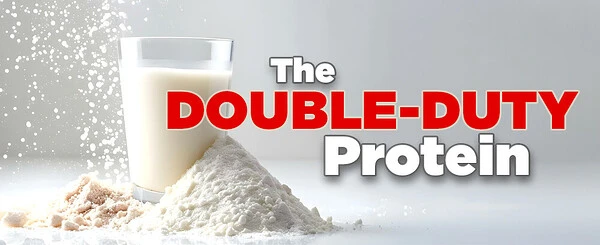
The Double - Duty Protein: Unveiling the Wonders of Casein
I. The Multifaceted Role of the Protein
This particular protein serves a dual purpose, significantly enhancing both the metabolic rate and muscle protein synthesis.
A. Casein: A Protein with Many Names
Casein is known by several appellations. It has been dubbed the "bodybuilder's protein" due to its unique properties. Characterized by its time - released and slow - digesting nature, casein enables a continuous release of amino acids into the bloodstream. This distinctive feature prolongs protein synthesis over a period of several hours, setting it apart from whey.
It has also earned the moniker "dieter's protein." During the cutting phases of a diet, casein demonstrates a dual ability. It effectively prevents muscle breakdown (catabolism) and provides a more extended feeling of fullness compared to other protein sources.
The micellar form of casein (available for purchase on Amazon) is particularly beneficial as it amplifies all the advantages of regular casein. Recognizing these attributes, researchers decided to conduct a study where casein was the sole source of protein. In this study, some subjects were assigned to a low - casein diet, while others were on a high - casein diet. The following is a concise overview.
II. The Study Design
A. Participant Recruitment
Researchers enlisted 12 men and 12 women for this investigation. All participants were housed in a metabolic respiration chamber for 36 hours, which was used to measure their total energy expenditure.
B. Dietary Protocols
Half of the subjects adhered to a diet with the following macronutrient composition:
Protein: 10%, sourced entirely from casein
Fat: 35%
Carbohydrates: 55%
The other half of the subjects had a diet with:
Protein: 25%, solely from casein
Fat: 20%
Carbohydrates: 55%
Both groups consumed approximately the same number of calories and carbohydrates. However, the high - casein group (25% protein) reduced their fat intake to accommodate the additional protein. The casein for both groups was provided in the form of a special custard formulated for research purposes.
After a certain period, the two groups switched diets and repeated the regimen. A comprehensive range of tests was conducted, including blood, urine, and body composition analyses, along with measures of appetite. Since the subjects were confined to the small respiration chambers (akin to a tiny New York apartment), they remained sedentary throughout the study.
III. Study Outcomes
A. Energy Expenditure
The high - casein group experienced a 2.6% greater increase in total energy expenditure (TEE) per day. This indicates that they burned more calories compared to the low - casein group.
Additionally, the high - casein group burned more calories during sleep (specifically, their sleeping metabolic rate or SMR).
B. Protein and Fat Balance
- In comparison to the low - casein diet, the high - casein diet led to a positive protein balance and a negative fat balance.
C. Appetite Regulation
- Hunger was suppressed by 41% more in the high - casein group, and satiety (the feeling of fullness) increased by 33% more.
D. Glucose and Insulin Responses
- Despite both diets having the same carbohydrate content (55%), plasma glucose concentrations were lower in the high - casein diet, likely due to slower gastric emptying. This was also reflected in the insulin responses.
IV. Key Takeaways
Based on a 2000 - calorie diet, the high - casein group consumed 125 grams of casein per day, while the low - casein group had 50 grams. This study, in many respects, reaffirms the principle that a higher protein intake is more beneficial than a lower one. However, it also emphasizes the remarkable properties of casein, suggesting that a substantial portion of our daily protein should be derived from casein, especially if the goals are to achieve or maintain leanness or to build muscle.
A. Dietary Sources of Casein
Natural dietary sources of casein include milk, cottage cheese, most cheeses, and Greek yogurt. Greek yogurt, in particular, has a higher casein content as it is strained to remove whey.
B. Casein in Supplements
In the realm of supplements, most inexpensive protein powders contain little to no casein. Whey, which is more cost - effective and has its own merits, elicits a significant insulin response. Some products use calcium caseinate, which is absorbed by the body even more rapidly than whey, causing a sharp increase in insulin. Moreover, it fails to provide sustained levels of amino acids. Calcium caseinate can be considered a "pseudo" casein, commonly found in ready - to - drink (RTD) products. It is crucial to be aware of this.
The ideal supplement should contain micellar casein. Micellar casein consists of soap - bubble - like molecules (micelles) that form a bolus in the stomach upon consumption, resulting in extremely slow digestion. Additionally, micellar casein exhibits a more potent anti - catabolic effect compared to standard casein. One such product is MD Protein (available for purchase on Amazon), which contains an adequate amount of micellar casein.
V. Reference
Hochstenbach - Waelen. "Comparison of 2 diets with either 25% or 10% of energy as casein on energy expenditure, substrate balance, and appetite profile." The American Journal of Clinical Nutrition. Volume 89, Issue 3, March 2009.
A Power Protein for Muscle Gain and Fat Loss
•
Author: Gareth Sapstead
•
fitness
sport
life
Share this article